


Where to Place a Lakshmi–Ganesh Frame at Home
A simple guide to choosing the right wall, direction and height for a divine wall frame in your home or office.
ShreeOm Vastu
Apni details bhejein, hamari Vastu team aapse sampark karegi.
Your request has been received.
Our team will get back to you within 24 to 48 hours.


Discover Your Space
Thoughtfully chosen pieces for a harmonious home.
Premium Collection


Wealth & Business Prosperity
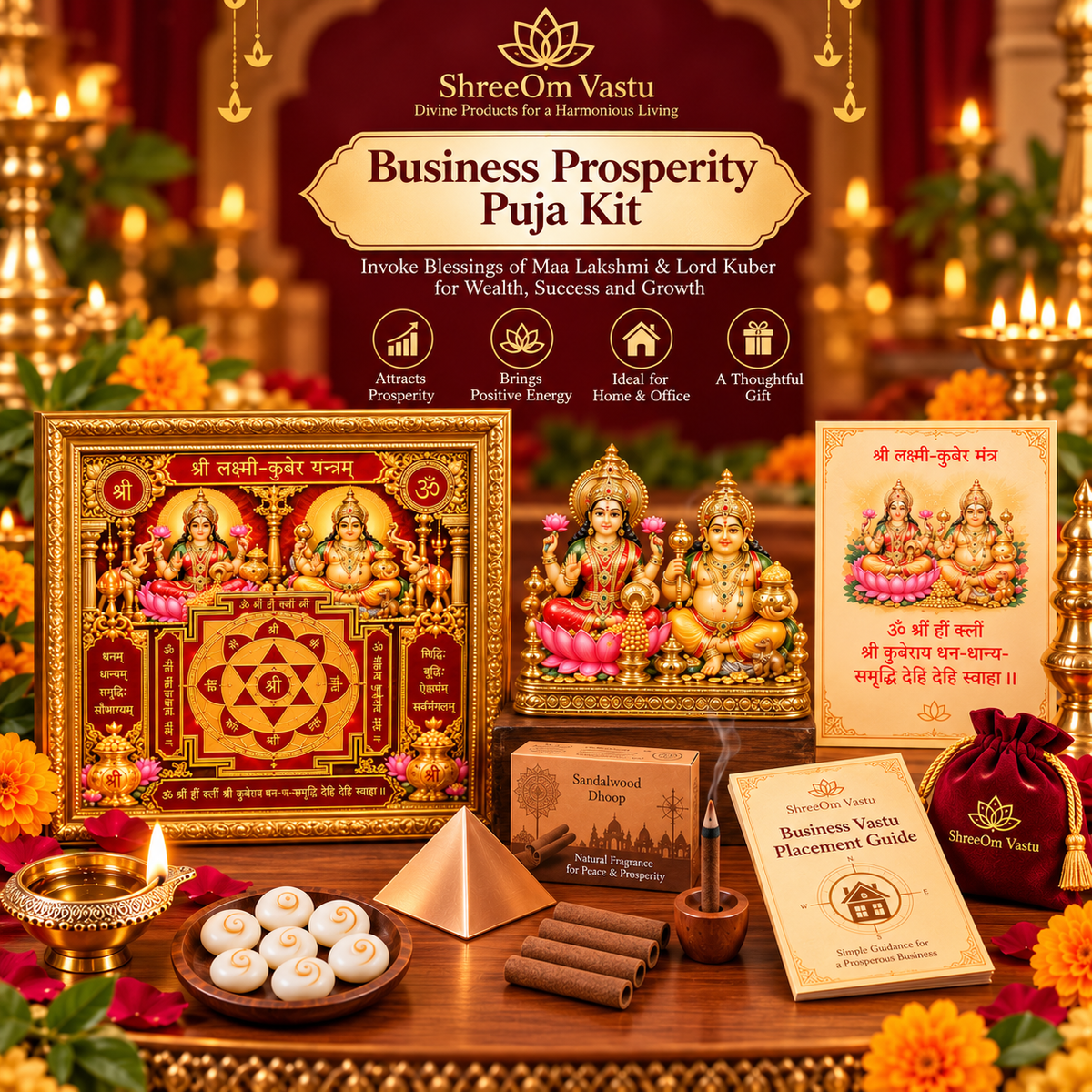
Nine-piece curated kit with a Lakshmi–Kubera Yantra frame, Copper Vastu Pyramid and Gomti Chakras. Ideal for shops, offices and business inaugurations.
Curated Sets


Every Day & Every Festival


Why ShreeOm Vastu
Years of Legacy
Trusted by Vastu experts across India for over two decades.
Traditional Craft
Sacred Yantras and divine décor that honour India's spiritual heritage.
Gift-Ready Kits
Premium red-and-gold presentation for Diwali, weddings and housewarmings.
Placement Guidance
Selected kits include a Vastu placement guide for your space.
Vastu Facts
Vastu Facts · 4 min read
A simple guide to choosing the right wall, direction and height for a divine wall frame in your home or office.

Vastu Facts · 4 min read
Understand the sacred geometry of the Shri Yantra and the traditional way of placing and caring for it.

Vastu Facts · 3 min read
Om, Swastik, Shubh Labh and more: what each symbol means and how to welcome positivity at your door.
Maa Lakshmi and Lord Ganesha are worshipped together in Indian homes, especially during Diwali and Dhanteras. Lakshmi is associated with prosperity and abundance, and Ganesha with new beginnings and the removal of obstacles. A framed image of the two is one of the most loved pieces of devotional décor, and in Vastu tradition, where you place it matters as much as the frame itself.
According to traditional Vastu guidance, the north-east corner of the home is considered the most sacred, which is why it is often chosen for the pooja room. The north and east walls are also widely considered auspicious for divine images. If you are placing the frame in a living room or office, a north or east-facing wall is a good starting point.
Dust the frame regularly and keep the surrounding area tidy. Many families light a diya or incense near the frame on Fridays and festival days. A well-kept, well-lit space is what Vastu is really about.
This article shares traditional Vastu beliefs and cultural practices for general interest. It is not a substitute for personalised advice from a qualified Vastu consultant.
The Shri Yantra is one of the most revered sacred diagrams in Hindu tradition. It is made of nine interlocking triangles that radiate outward from a central point (the bindu), surrounded by lotus petals and an outer square frame with four gates. In tradition, it is associated with Goddess Mahalakshmi and is regarded as a symbol of abundance, harmony and spiritual focus.
The upward and downward triangles are traditionally understood to represent the union of the divine masculine and feminine energies. The central point stands for the source, and the lotus petals for purity and growth. Many people also use the Shri Yantra as a point of focus during meditation.
Traditionally, it is kept away from bathrooms, bedrooms and cluttered corners.
A Shri Yantra wall frame makes a meaningful gift for housewarmings, weddings and business inaugurations, as it combines devotional symbolism with elegant décor.
This article shares traditional beliefs and cultural practices for general interest. It is not a substitute for personalised advice from a qualified Vastu consultant.
In Indian homes, the main door is more than an entry point. It is where we welcome family, guests and, according to tradition, good fortune. That is why doorways are decorated with auspicious symbols, especially during festivals. Here is what some of the most popular ones stand for.
The sacred sound and symbol of Hindu tradition, representing spiritual consciousness and devotion. An Om at the entrance sets a calm, devotional tone for the home.
An ancient symbol of auspiciousness and well-being, drawn or hung at doorways for centuries during pujas and celebrations.
"Shubh" means auspicious and "Labh" means gain. Seen together at entrances of homes and shops, they express a wish for good beginnings and prosperity.
Revered as the remover of obstacles, Ganesha is commonly placed at the entrance to welcome new beginnings.
A symbol of vitality, radiance and positive energy, often used to bring warmth and light to an entrance display.
This article shares traditional Vastu beliefs and cultural practices for general interest. It is not a substitute for personalised advice from a qualified Vastu consultant.
Thanks for subscribing!
This email has been registered!
| Product | SKU | Description | Collection | Availability | Product type | Other details |
|---|
Take 20% off your first order
Enter the code below at checkout to get 20% off your first order